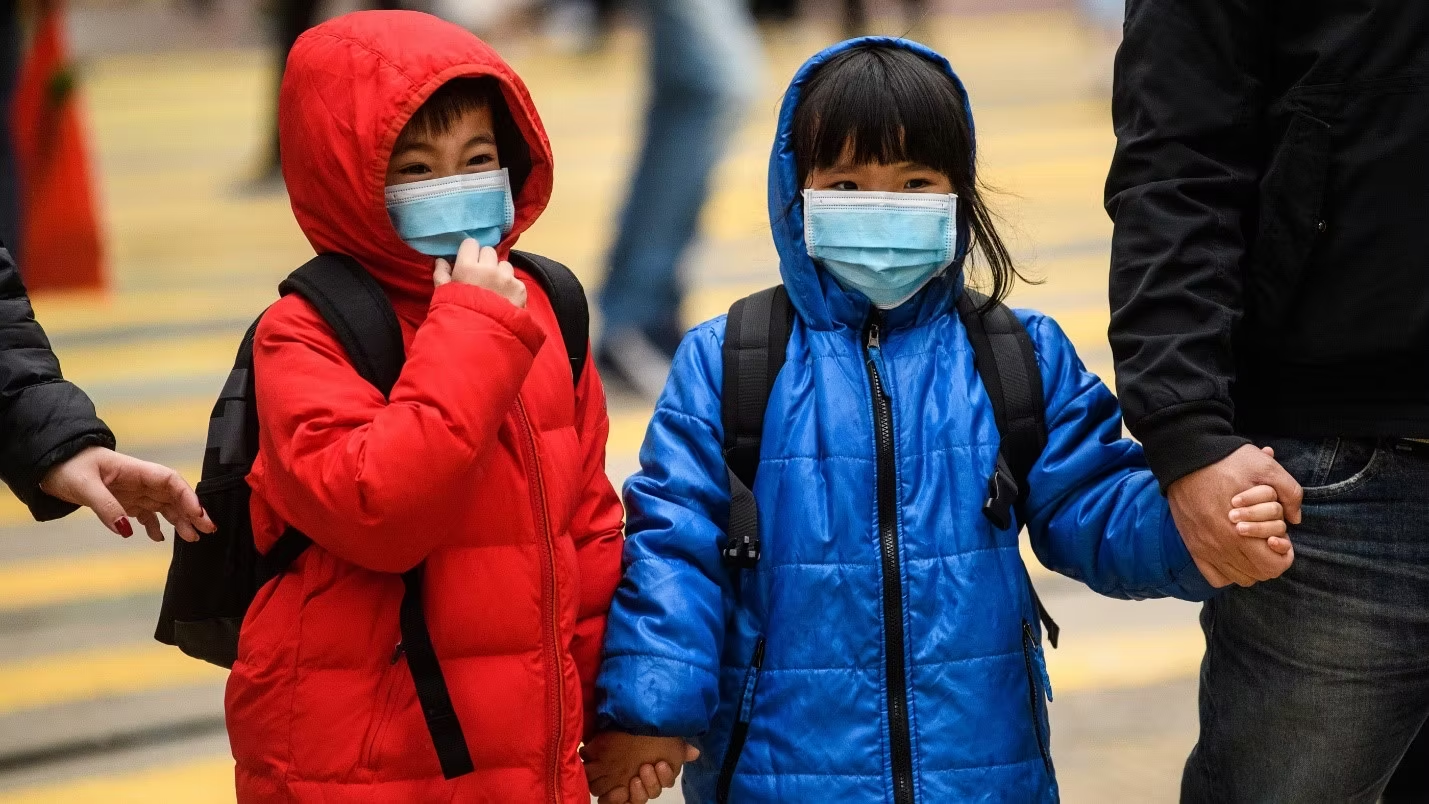
Children in this generation are strongly affected by the COVID-19 pandemic. Many schools have closed, leading to limited opportunities for young students to socialize. With school districts transitioning to online-based learning, isolation has been challenging for many of our youth. This abrupt transition may have caused negative effects on students still developing their social skills.
Without the proper social skills that we usually gain from frequent physical interactions, it becomes difficult for many young kids to adjust to an isolated environment. The absence of in-person school and friend-to-friend interaction takes away opportunities to build friendships. This is a struggle in our community in particular, as the Bellevue School District does not require students to turn on cameras. Therefore, most students keep their cameras off. Group activities and projects, which are among the best ways to create friendships in class, are not quite the same experience. Students often refrain from turning on cameras, which makes it difficult to interact—or crack jokes. Same goes for recess, which was one of the best ways for kids to have fun and make friends with their peers. However, due to online learning, many kids no longer have the chance to do this in the same way. Thus, most students, especially students who are new to the school or the district, are unable to create friendships with as much ease as when school was in-person.
Furthermore, the lack of friendship building is not the only negative effect of isolation. Some children who dealt with bullying or social anxiety prior to the pandemic might have found social distancing to be a relief, but others with mental-health issues or a less-than-happy home environment are more likely to suffer from socially distancing at home. In addition, there are children who may not have access to school materials and resources due to financial instability. Others may be burdened with at-home stress and responsibilities. Those without anyone to bond with at home will face a much harder time in quarantine.
On the other hand, quarantine has not been entirely bad. Over the past few months in quarantine, many kids have become better-behaved and more independent. Many parents have reported that their kids were more receptive to staying at home because that allowed them to spend more quality time with their families. Research Professor Peter Gray noticed that there have been substantial reports of children feeling happier and less stressed now than prior to the pandemic. By changing our way of interacting and having fun as well as adapting properly to our new environments, we will be able to discover vast improvements in terms of bringing greater motivation and happiness to young people.